
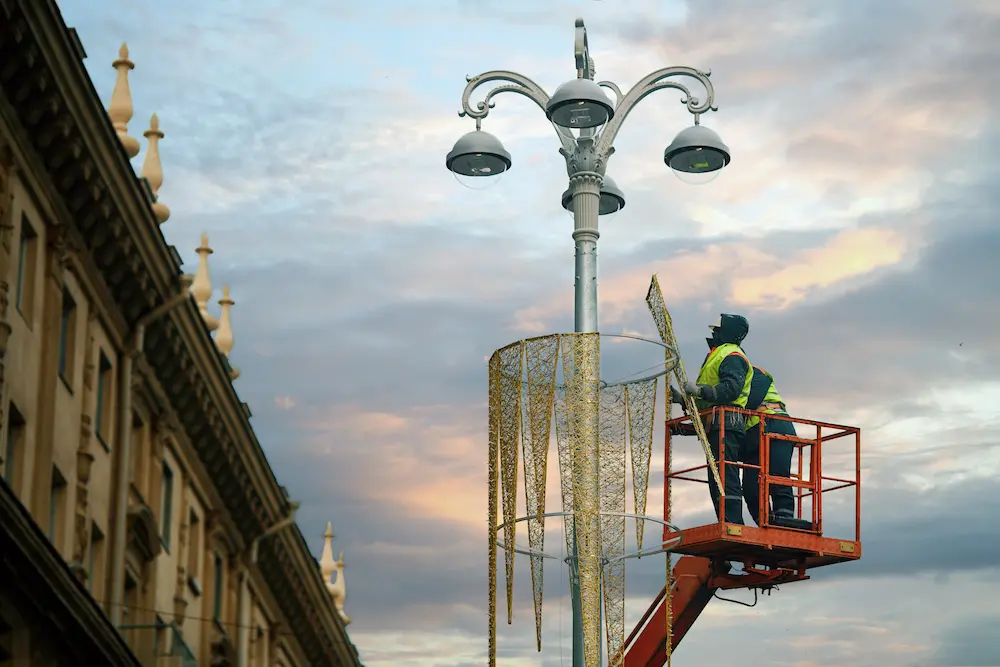
When a city invests in Christmas lighting, the goal is bigger than filling streets with sparkle. The right display can welcome visitors, support local businesses, create photo-worthy moments, and help a downtown district feel active during one of the busiest seasons of the year.
For municipal buyers, that also means the purchasing process has to be practical. You are not choosing lights for a single home or small storefront. You are planning for streets, parks, city buildings, public gathering areas, and displays that may need to perform across multiple seasons.
At Creative Displays, we help cities, installers, and commercial buyers choose lighting products that are built for outdoor use, large-scale visibility, and repeat installation. Before purchasing commercial Christmas lights, here are the key factors municipal teams should consider.
Start With the Location and Purpose of the Display
Every lighting project should begin with the space itself. A downtown street, municipal building, public park, and shopping district entrance may all need different types of lighting. The right choice depends on how people will see the display, how close they can get to it, and what kind of impression the city wants to create.
For example, lights used along a main street may need to create consistent visibility from block to block. Lights placed near a city hall or public plaza may need to support a larger focal point, such as a tree, wreath, or walk-through display. In parks, lighting often needs to balance visual impact with safe movement through open areas.
This is where commercial holiday lighting planning becomes important. Cities should think through the full viewing experience before selecting products. Will visitors be driving past, walking through, taking photos, or gathering for an event? The answer can help determine the size, brightness, color, and layout of the display.
Choose Commercial-Grade Products, Not Consumer Lights
Municipal Christmas lighting has to hold up under conditions that consumer products are not designed for. Public displays are exposed to weather, repeated handling, longer run times, and larger installation areas. That is why commercial-grade products are so important for cities and commercial buyers.
Professional Christmas lights are built with durability, consistency, and outdoor performance in mind. They are designed for larger applications where reliability matters, especially when the display will be seen by residents, visitors, business owners, and event guests throughout the season.
Cities should look for lighting products that are made for commercial use, not seasonal retail shelves. This includes stronger materials, outdoor-rated construction, and product options that support larger, more coordinated installations. While consumer lights may seem cost-effective upfront, they often do not offer the same long-term value for municipal projects.
When buyers choose commercial Christmas lights that are built for repeat use, they are also helping protect the budget over time. A stronger product can reduce replacement needs, simplify future planning, and help the display look more consistent from year to year.
Understand the Difference Between Bulbs, Strings, and Retrofit Options
Not every lighting product serves the same purpose. Before purchasing, municipal buyers should understand which type of lighting best supports the display plan.
Christmas LED light strings are often used for trees, rooflines, garland, wreaths, and areas where flexible installation is needed. They can help create clean lines, bright accents, and layered designs across public spaces.
Christmas LED retrofit bulbs are useful when existing displays or socket systems need to be refreshed with more efficient lighting. For cities that already own commercial display pieces, retrofit bulbs can be a practical way to update the look without replacing the entire structure.
The right product mix often depends on what the city already owns, what needs to be replaced, and what new areas are being added to the display. Our team can help buyers compare options so they are not ordering lights that look right online but do not fit the installation plan.
Plan for Scale, Brightness, and Visibility
Scale is one of the most common issues in city lighting projects. A product can look impressive in a catalog photo but feel too small once it is installed along a wide street or in a large public space. Commercial buyers should always compare product dimensions, viewing distance, and installation height before making a final decision.
Brightness also matters. Professional Christmas lights should provide strong visibility without creating glare or uneven patches. A city display should feel polished and intentional, especially when lights are being used across multiple blocks or public areas.
Color consistency is another important detail. If a project includes new and existing lights, buyers should consider how the tones will look together once installed. Warm white, cool white, multicolor, and specialty lighting can all create a different atmosphere. The key is making sure the choices feel coordinated across the full display.
For municipal Christmas lighting projects, it is helpful to gather measurements early. Street widths, pole heights, tree sizes, roofline lengths, power access points, and storage capacity can all influence what products will work best.
Think About Power, Installation, and Safety
Large-scale commercial holiday lighting should be planned with installation requirements in mind from the start. Cities need to consider where power is available, how lights will be attached, who will install them, and how the display will be maintained throughout the season.
This is especially important for municipalities working with public property. Displays may need to be installed near sidewalks, roads, parking areas, buildings, and high-traffic gathering spaces. Product placement should support both the visual design and the safety of visitors and installation crews.
Before ordering, buyers should review the installation environment carefully. Are there existing outlets? Will extension runs be needed? Are products being mounted to trees, buildings, poles, or freestanding structures? Will the installation team need lift access?
These questions help prevent delays and reduce last-minute changes. A strong plan makes the display easier to install, easier to troubleshoot, and easier to repeat in future seasons.
Consider Long-Term Value, Not Just the First Purchase
The lowest upfront price is not always the best value for a city. Municipal buyers need products that can be used year after year, especially when budgets must be planned carefully and approved in advance.
Commercial Christmas lights should be evaluated based on durability, energy efficiency, replacement needs, storage requirements, and how well they support future display growth. A city may begin with one main street or plaza, then add more lighting to parks, gateways, or shopping districts over time.
That is why we often encourage buyers to think in phases. A strong first-year display can become the foundation for a larger Christmas program. When products are chosen with future expansion in mind, it becomes easier to maintain a consistent look while adding new features each season.
Storage is also part of long-term value. Lights should be cleaned, packed, labeled, and stored correctly after the season. Proper storage helps prevent tangling, moisture damage, breakage, and unnecessary wear. For many commercial buyers, good storage practices are one of the biggest factors in helping lighting products last for years.
Work With a Supplier That Understands Municipal Projects
Cities need more than a box of lights. They need guidance, reliable product options, and support from a team that understands commercial timelines, public spaces, and seasonal deadlines.
At Creative Displays, we have worked with cities and commercial buyers across the country for decades. We understand that municipal projects often involve budgets, approvals, installation schedules, and multiple decision-makers. Our goal is to help buyers choose products that fit the space, support the design plan, and hold up through repeated seasonal use.
Whether you are refreshing an existing display or planning a larger citywide lighting project, the right products can make the season feel more organized, more festive, and more memorable for the community.
Build a Christmas Lighting Plan That Works for Your City
Commercial Christmas lights can do a lot for a city when they are chosen with the right strategy. They can guide visitors through downtown, highlight public spaces, support local events, and create a sense of pride that residents look forward to each year.
The best results come from planning early, choosing commercial-grade products, and thinking through installation, storage, power, scale, and long-term use before purchasing.
At Creative Displays, we help municipalities, installers, shopping centers, and public-space planners create Christmas lighting displays that are practical, durable, and built for impact. If your team is planning professional Christmas lights for a city, park, downtown district, or commercial property, we can help you choose the right commercial holiday lighting products for the space.
Start with our full selection of commercial Christmas lights, or explore Christmas LED retrofit bulbs and Christmas LED light strings to compare options for your next municipal Christmas lighting project.
FAQ: Frequently Asked Questions About Commercial Christmas Lights for Cities
What are the benefits of using commercial Christmas lights instead of consumer-grade lights?
Commercial Christmas lights are designed for larger installations, longer operating hours, outdoor exposure, and repeated seasonal use. They typically offer greater durability, more consistent performance, and a longer lifespan than consumer-grade products, making them a better investment for municipal and commercial applications.
What types of commercial Christmas lights are commonly used by cities?
Many municipalities use a combination of Christmas LED light strings, LED retrofit bulbs, pole-mounted lighting displays, tree lighting products, and architectural lighting elements. The right combination depends on the project’s goals, installation environment, and existing display inventory.
How early should cities begin planning Christmas lighting projects?
Cities should begin planning Christmas lighting projects as early as possible and ideally by June. Early planning allows time for budgeting, approvals, product selection, measurements, installation coordination, and scheduling before the busy Christmas season.
What should municipalities consider before purchasing commercial Christmas lights?
Municipal buyers should evaluate the display location, viewing distance, power availability, installation requirements, storage capacity, maintenance expectations, and long-term expansion goals. These factors help ensure the lighting system fits the space and supports future growth.
How can cities maximize the lifespan of commercial Christmas lights?
Proper storage and handling are essential. After the season, lights should be cleaned, labeled, organized, and stored in a dry environment to help prevent tangling, moisture damage, broken components, and premature wear. Commercial-grade products combined with proper storage practices can provide reliable performance for many seasons.