
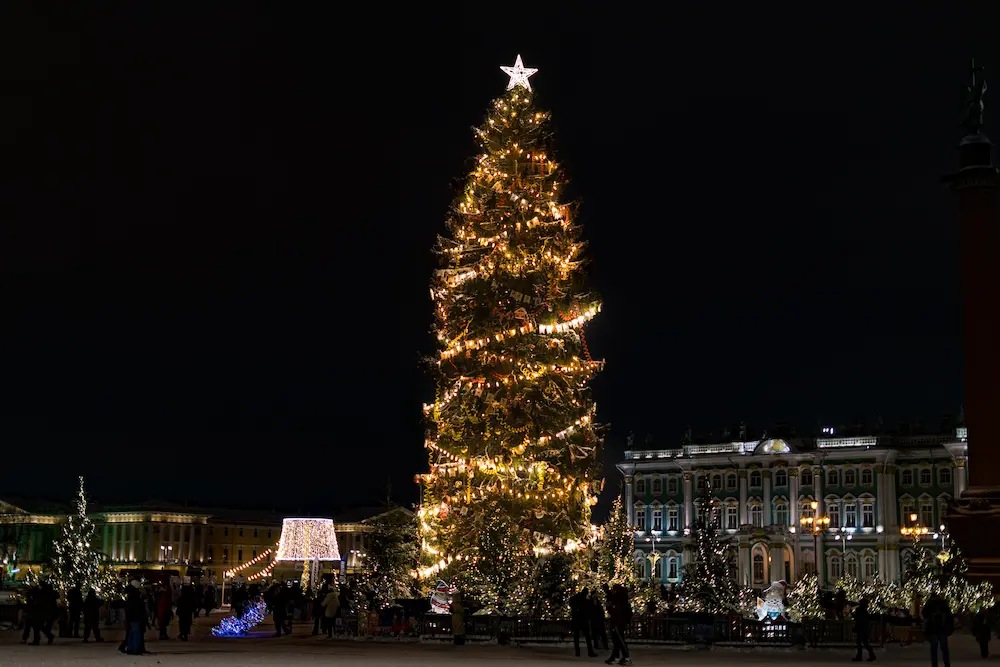
A Christmas tree can become the centerpiece of a large venue, downtown plaza, shopping center, hotel, theme park, or public gathering space. It is often the first thing visitors notice, the backdrop for photos, and the visual anchor that helps the entire Christmas display feel complete.
But not every tree is built for that kind of role.
Retail trees may work well in homes, offices, or small indoor spaces, but large venues have different needs. They need height, structure, visibility, durability, outdoor performance, and a finished look that can hold up throughout the season. For commercial buyers, the difference between retail trees and commercial Christmas trees is not just size. It is the difference between a temporary decoration and a planned public display.
At Creative Displays, we help municipalities, shopping centers, venues, and installers choose trees that fit the space, support the visitor experience, and deliver long-term value. Before choosing a tree for a public or commercial setting, here is what large venues should know.
Retail Trees Are Designed for Smaller Spaces
Retail Christmas trees are usually made for homes, small lobbies, offices, and light seasonal use. They are often designed to be assembled by one or two people, placed in a controlled indoor environment, and taken down after a short season.
That does not make them a bad option for the right setting. It simply means they are not designed for the demands of large public displays.
A tree that looks full and attractive in a home can look undersized in a hotel atrium, city plaza, outdoor entertainment district, or shopping center entrance. Large spaces need pieces that can be seen from a distance and still feel proportional to the surrounding buildings, walkways, signs, and gathering areas.
This is one of the biggest reasons commercial buyers turn to commercial Christmas trees. They are made for larger environments where scale, structure, and presentation matter from every angle.
Commercial Trees Are Built for Scale
Large venues need trees that match the size of the space. A 7-foot or 9-foot retail tree may look impressive indoors, but it can quickly disappear in a wide-open setting. In public spaces, trees often need to compete visually with tall ceilings, storefronts, streetlights, building facades, and crowds.
That is where giant Christmas trees become important. These trees are designed to create a true focal point, especially in areas where visitors gather, take photos, or attend seasonal events.
Scale affects more than appearance. It also affects how people move through the space. A well-sized tree can help define a plaza, mark an entrance, guide foot traffic, or create a central meeting point. When the tree feels too small, the display can lose its impact.
Before purchasing, large venues should gather accurate measurements for the display area. Ceiling height, outdoor clearance, viewing distance, installation footprint, and surrounding features all influence what tree size will work best. The right dimensions help buyers choose a tree that feels balanced instead of underwhelming.
Outdoor Venues Need Outdoor-Rated Products
Many large Christmas displays are installed outdoors or in semi-exposed areas. That includes downtown squares, shopping center courtyards, amusement parks, resort entrances, municipal lawns, and entertainment districts. These environments create conditions that retail trees are not typically built to handle.
Outdoor commercial Christmas trees are made with public display needs in mind. They are designed for exposure, repeated installation, and seasonal performance in settings where wind, moisture, temperature changes, and heavy visibility are part of the project.
Outdoor placement also brings added planning requirements. Buyers need to think about anchoring, stability, power access, lighting visibility, and how the tree will be installed safely. A retail tree is generally not engineered for those larger public-use considerations.
For outdoor venues, choosing the right tree from the beginning helps reduce stress later. It supports a cleaner installation, a more reliable display, and a stronger finished look throughout the Christmas season.
Structure and Assembly Matter
Retail trees are usually built around simple center-pole construction. That can work well in smaller indoor settings, but larger commercial displays often need stronger systems and more organized assembly.
Commercial trees may use panel systems, tower structures, or other large-scale construction methods that support greater height and fullness. These systems are designed for professional installation and repeated seasonal use.
Christmas panel trees can be a strong option for venues that want a full, classic tree shape with structured sections. They help create a polished appearance while supporting large-scale installation needs.
Commercial tower Christmas trees are often used when venues need strong height, visibility, and impact in a public setting. They can help create the kind of centerpiece that draws attention from a distance and anchors a larger Christmas display.
The right structure depends on the space, installation team, storage capacity, and long-term plans for the display. Our team helps buyers compare tree styles so the final choice fits both the setting and the operational needs behind the scenes.
Large Venues Need a Tree That Photographs Well
For many venues, the Christmas tree is more than a decoration. It is part of the visitor experience. People gather around it, take photos in front of it, share it online, and associate it with the venue’s seasonal atmosphere. That makes visual quality especially important.
City Christmas tree displays, shopping center displays, and large venue trees need to look full, balanced, and intentional from multiple viewpoints. Visitors may see the tree from across the street, from upper-level walkways, through storefront windows, or up close during events. The tree needs to hold up visually from all of those angles.
Retail trees are often designed to look best from a short viewing distance. Large venue trees need to perform at a larger scale. Height, lighting density, branch fullness, color consistency, and ornament placement all affect how the tree appears in person and in photos.
A strong commercial tree can become a seasonal landmark. That value matters for tourism, community engagement, social media visibility, and repeat visits.
Durability Protects the Budget Over Time
Large Christmas trees are an investment, so buyers should think beyond the first season. Retail trees may have a lower upfront price, but they are not always the better long-term choice for commercial use.
Commercial Christmas trees are designed with repeat installation and storage in mind. When handled and stored correctly, they can support a venue’s Christmas display for multiple seasons. That can help protect budgets and reduce the need for frequent replacement.
Durability also supports consistency. When a tree looks strong year after year, the venue can build a recognizable Christmas tradition around it. Residents, guests, shoppers, and visitors know what to expect, and the display becomes part of the seasonal identity of the space.
Proper storage is one of the biggest factors in helping large trees last. Tree sections, panels, lights, and accessories should be cleaned, labeled, packed, and stored in a dry, organized area after takedown. Good storage helps prevent damage, missing parts, moisture issues, and unnecessary wear before the next installation.
The Right Tree Supports the Whole Display
A tree should not be chosen in isolation. For large venues, the tree usually needs to coordinate with lighting, wreaths, garland, pole mounts, dimensional displays, photo areas, and other Christmas elements throughout the property.
When the tree is scaled correctly, it can help everything else feel more connected. It becomes the anchor that ties the display together. When it is too small, too plain, or not built for the setting, the rest of the display can feel less complete.
This is especially important for city Christmas tree displays and large public venues where the tree may be part of a bigger event plan. Tree lightings, photo opportunities, shopping promotions, concerts, and community gatherings all benefit from a strong central feature.
We help buyers look at the full environment before selecting a tree. That includes the display location, viewing angles, installation plan, power access, surrounding decor, and future expansion goals.
Commercial Buyers Should Plan Early
Large trees require more planning than standard retail products. Municipalities and venues may need time for budget approval, product selection, measurements, delivery coordination, installation scheduling, and storage preparation.
Planning early also gives buyers more flexibility. It allows time to choose the right size, compare styles, and make sure the tree supports the full Christmas display plan. Waiting too long can limit options and create unnecessary pressure close to installation season.
At Creative Displays, we recommend starting the planning process as early as possible, especially for new or expanded displays. At the latest, large venues should begin planning by June so there is enough time to make confident purchasing decisions before peak season.
That early planning can make the entire project smoother, from ordering to installation to takedown.
Choose a Tree Built for the Venue, Not Just the Season
Retail trees can be a fine choice for smaller indoor settings, but large venues need products built for a different level of visibility, durability, and performance. The right tree should fit the space, support public use, photograph well, and provide value across multiple seasons.
Commercial Christmas trees give cities, shopping centers, hotels, theme parks, and large venues the scale and structure needed to create a memorable centerpiece. Whether the goal is a classic indoor focal point, a large outdoor plaza display, or one of the community’s signature city Christmas tree displays, choosing the right product makes a major difference.
At Creative Displays, we help commercial buyers select trees that match their space, timeline, and long-term goals. Explore our full selection of commercial Christmas trees, including Christmas panel trees and commercial tower Christmas trees, to start planning a display that feels impressive, organized, and built for repeat use.
Frequently Asked Questions
What is the difference between a commercial Christmas tree and a retail Christmas tree?
Commercial Christmas trees are designed for public spaces, large venues, and repeated seasonal use. They are typically larger, more durable, and built with structural systems that support outdoor installations, high visibility, and long-term performance. Retail trees are generally intended for homes, offices, and smaller indoor environments.
How tall should a commercial Christmas tree be for a public space?
The ideal height depends on the location, viewing distance, and surrounding architecture. Large plazas, downtown districts, shopping centers, and public gathering spaces often require taller trees that can serve as a focal point and remain visible from a distance. Accurate site measurements are important before selecting a tree size.
Are commercial Christmas trees suitable for outdoor installations?
Yes. Many commercial Christmas trees are specifically designed for outdoor use and can be installed in parks, downtown districts, shopping centers, resorts, entertainment venues, and municipal spaces. Buyers should consider factors such as anchoring, wind exposure, power access, and installation requirements when planning an outdoor display.
What type of commercial Christmas tree is best for large venues?
The best option depends on the venue’s goals and available space. Christmas panel trees are popular for creating a traditional full-tree appearance, while commercial tower Christmas trees are often chosen for their height, visibility, and ability to create a dramatic focal point in large public settings.
How can commercial Christmas trees become part of a long-term display strategy?
Many municipalities, shopping centers, hotels, and theme parks use commercial Christmas trees as the centerpiece of a larger display program. By coordinating the tree with lighting, wreaths, garland, dimensional displays, and seasonal events, organizations can build a recognizable Christmas tradition that can be expanded and refreshed.